Birthstones: their meaning month by month
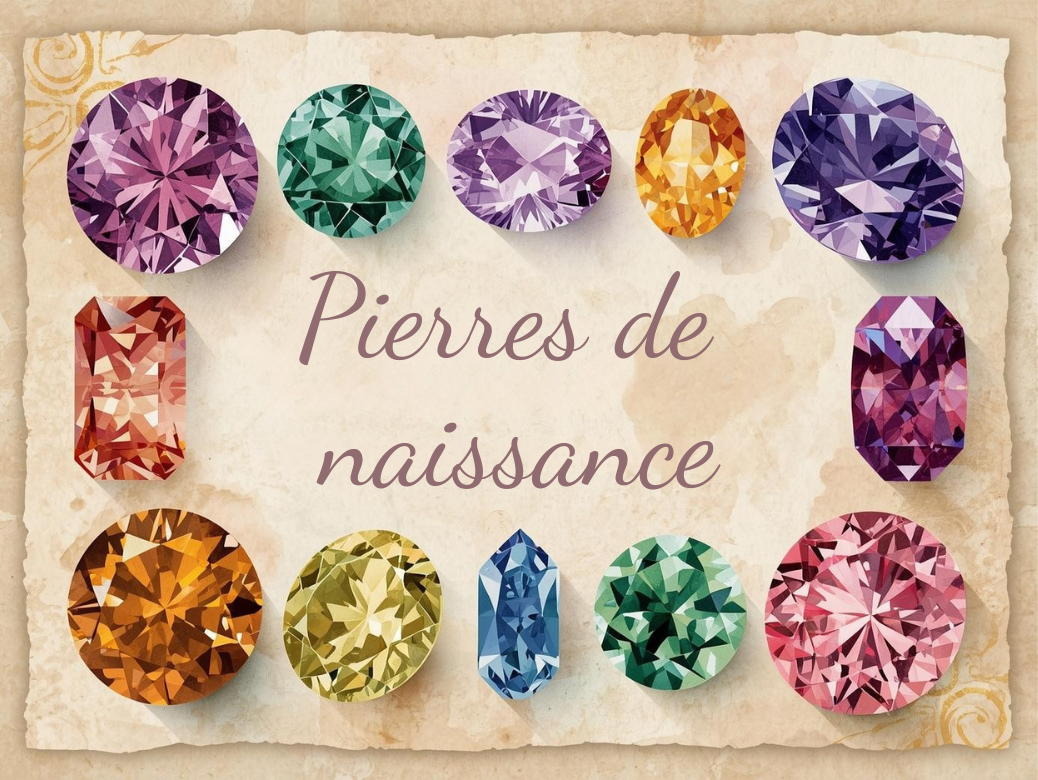
What if each month of the year was associated with a stone? Behind their colors and reflections, birthstones have long carried cultural and symbolic meanings. Without dogma or “magical” promises, this guide offers simple and documented reading to choose a jewellery item that is meaningful — to you or someone you love.
Basics
What is a birthstone? It is a gem traditionally associated with a month of the year. Everyone can thus link their date of birth to a stone commonly used in jewelry.
Where does the list come from? The modern list was standardized in the 20the century by professional organizations (with some updates over time). Depending on the country and the times, variations exist: we indicate below the version most recognized today in jewelry.
A little history
The link between stones and symbols dates back to Antiquity and is perpetuated in mineralogy treatises (the “lapidaries”). The idea of associating twelve stones per year were structured later, up to the modern lists adopted by the profession. Today, we rely on these cultural references – without turning it into a science – to choose a gem in accordance with an intention: protection, love, clarity, etc.
The symbolism of stones
By tradition, each stone evokes qualities (serenity, loyalty, courage, etc.). It remains a cultural symbolism : everyone is free to be sensitive to it or not. The main thing is to choose a jewellery item which tells a personal story.
Birthstone Calendar (January → December)
Note: some sources mention “alternative stones” for a few months. We display below the most common modern stone, and indicate accepted variants if necessary.
January — Garnet (possible variant: tsavorite, green garnet)
Colors: deep red (garnet also exists in green, orange, etc.)
Symbolic: energy, courage, protection.
February — Amethyst
Color: transparent purple
Symbolic: wisdom, serenity, balance.
Mars — Aquamarine
Color: light blue, crystalline
Symbolic: clarity, communication, appeasement.
April — Diamond
Color: colorless (can be tinted)
Symbolic: strength, loyalty, purity.
May — Emerald
Color: deep green
Symbolic: renewal, sincere love, hope.
June — Pearl (alternatives accepted: alexandrite, moonstone according to the lists)
Colors: white, cream, sometimes pink
Symbolic: gentleness, sincerity, harmony.
July — Ruby
Color: bright red
Symbolic: passion, vitality, courage.
August — Peridot
Color: golden green
Symbolic: light, protection, joy.
September — Sapphire
Colors: especially blue (also available in pink, yellow, green)
Symbolic: loyalty, wisdom, trust.
October — Opal (very widespread modern alternative: tourmaline)
Colors: iridescent reflections (opal) / multicolored (tourmaline)
Symbolic: creativity, inspiration, harmony.
November — Citrine (admitted alternative: topaz)
Colors: yellow to honey (citrine) / golden yellow to blue (topaz)
Symbolic: warmth, abundance, clarity.
December — Turquoise (modern alternatives: tanzanite, cubic zirconia)
Colors: blue-green (turquoise) / purplish blue (tanzanite) / bright blue (cubic zirconia)
Symbolic: protection, serenity, good fortune.
Frequently asked questions
Do I absolutely have to wear the stone of “my” month?
No. The list is a tradition. Choose the gem whose color, history and symbolism speak to you the most.
Why do we sometimes read different lists?
The lists have evolved according to countries and times. Some offer “alternative stones” (for example opal/tourmaline in October, turquoise/tanzanite/cubic zirconia in December). Our table follows the most common modern usage in jewelry.
Does symbolism have a “scientific” value?
No. This is a cultural tradition. Wear your jewellery item for sound sense, your story and the pleasure it provides.
To conclude
Offering (or treating yourself to) a birthstone means choosing a color, a material and a story. Whether you follow tradition to the letter or opt for a variation, the important thing is the intention: a sparkle that accompanies life's precious moments.



Comments